


Security Center
Important Notice
New Scam Messages
We’re seeing a rise in fraudulent texts and calls claiming to be from Valley Strong. These messages may ask you to click a link, share your login details, or provide a one-time code. Do not respond or click any links.
Remember
- Valley Strong will never ask for your passwords, full card numbers, PINs, or MFA codes.
- If you receive a suspicious message, delete it immediately and call us at (800) 221-3311.
Recognize the Signs
Stay Alert
Staying alert is the first line of defense against fraud. Scammers often rely on creating urgency or disguising themselves as trusted sources. Knowing the warning signs can help you pause, think, and protect your personal information before acting.

Slow Down
Scammers rely on urgency. Be cautious of anything implying you must act immediately.

Don’t Click
Real Valley Strong links begin with https://www.valleystrong.com or https://onlinebanking.valleystrong.com. If you have suspicion about a link, contact us.

Check The Details
Watch for spelling/grammar errors and tiny typos used to trick you into clicking.

Delete & Block
Remove suspicious messages so you don’t interact with them later.
From Valley Strong
It can be confusing to know which requests are legitimate. Valley Strong will never ask for highly sensitive details, and legitimate communications will never pressure you for immediate action. Understanding what to expect from us—and what not to expect—helps you avoid fraud.
We will never ask for:
- Your full Social Security number
- Online banking passwords
- Your full debit, credit, or ATM card number
- Your card PIN or CVV
- Your billing address
- Ask to have you pass along special codes, usually delivered by text or email, to help identify authorized activity, known as multi-factor authentication.
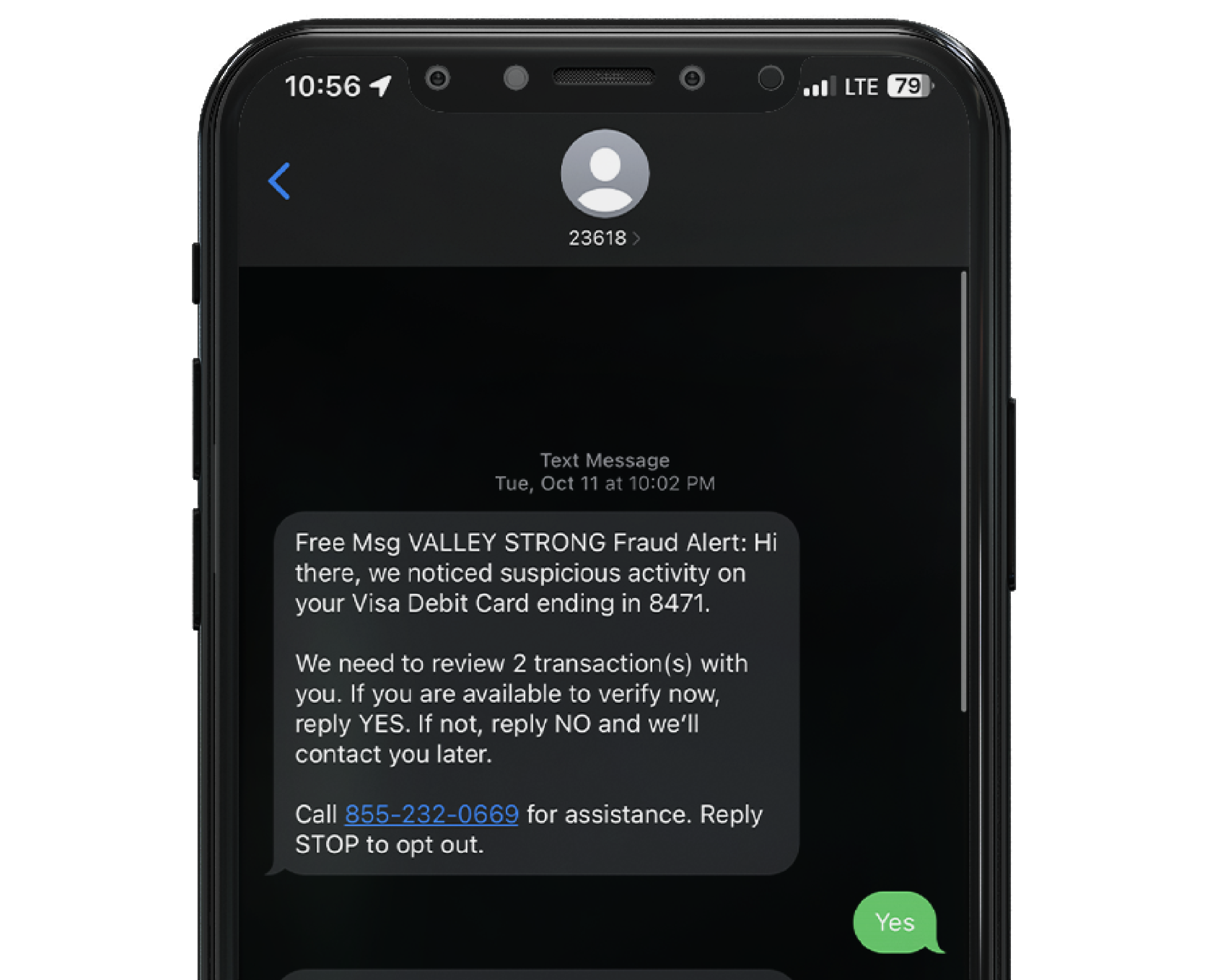
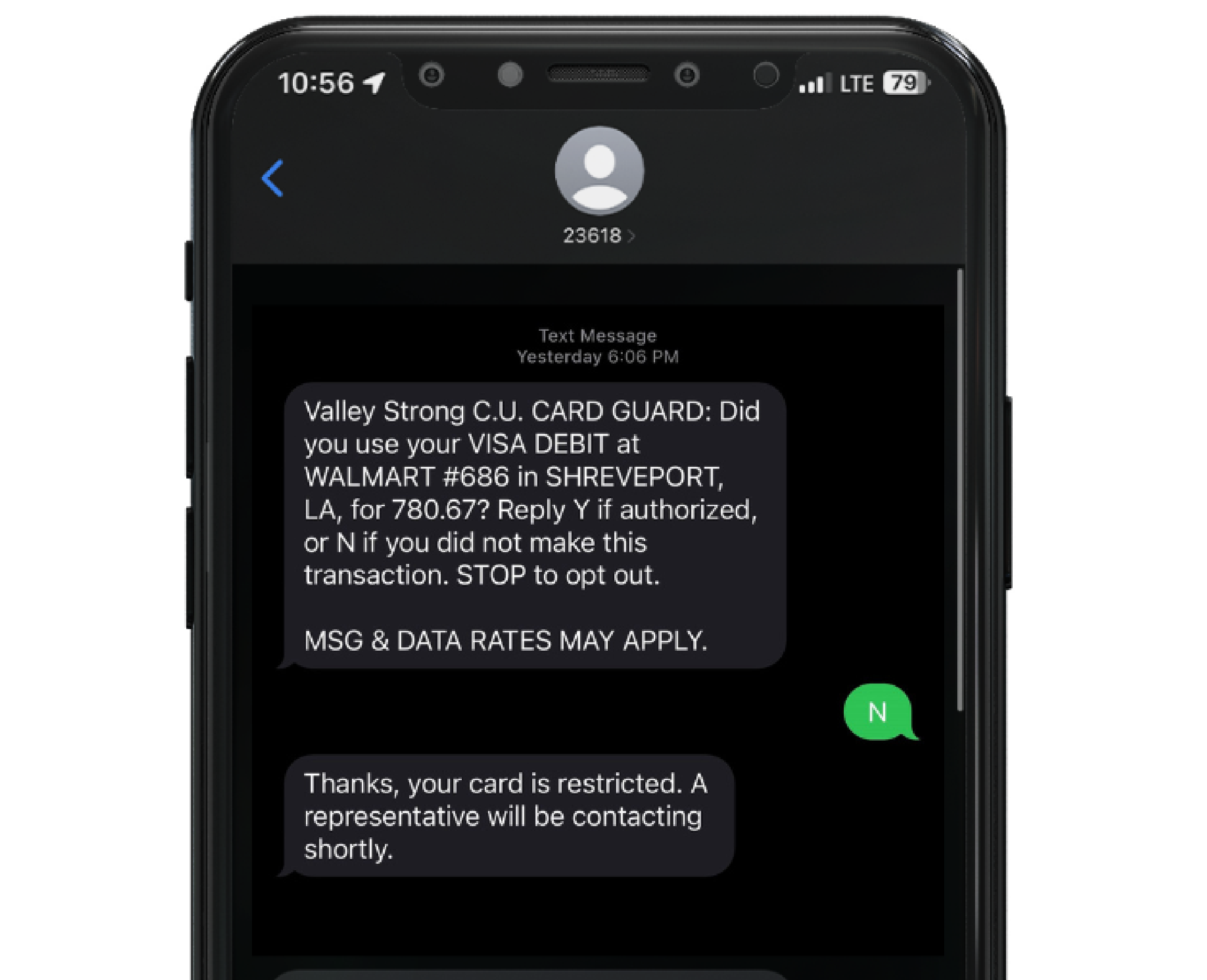
Not From Valley Strong
Messages pressuring immediate action, asking for sensitive info, or requesting MFA codes are fraudulent. Block and delete them.
Scam Alerts
Fraud attempts tend to rise during holidays and long weekends when financial institutions are closed. Scammers use this time to create pressure, hoping you’ll act without double‑checking. By reviewing common scam scenarios, you’ll be better prepared to spot and stop them.
To Report A Suspicious Text Message
Copy the message and forward it to 7726 (SPAM). This free service, supported by most mobile carriers, alerts your provider to the spam, helping them to investigate, block the sender, and improve spam filters for all customers.
If you’re uncomfortable on a call, don’t share information. Tell the caller you’ll contact Valley Strong directly and end the call.
Reduce Your
Risk
You can take simple, proactive steps to strengthen your security. From protecting your online credentials to reducing the amount of sensitive information that’s available to others, these actions lower your risk of becoming a target.

Beware of phishing
Fake emails, texts, or websites pose as trusted sources to steal info. When in doubt, don’t click.

Don’t routinely use your SSN
Ask if a different identifier can be used. Don’t carry your Social Security card; store it safely.

Enable Multi‑Factor Authentication
You need more than a password. Turning on MFA makes you significantly less likely to get hacked.

Go Paperless with eStatements
Mail can expose sensitive info. Reduce risk by receiving account statements online.
Send Money with
Zelle® Safely
Zelle® is a fast, convenient way to send money to friends, family, and people you know and trust. Because money is typically sent within minutes, it's important to use Zelle® with confidence and care.

Only Send Money to People You Trust
Zelle® is for sending money to friends, family, and people you know. Payments are typically sent within minutes and generally can't be canceled.

Use with Confidence
Always verify the recipient before sending money. Once a payment is sent, it generally can't be reversed.
Think Before You Send
Treat Zelle® like cash. Double-check the recipient's email or mobile number before completing your payment.

Protect Yourself from Payment Scams
Valley Strong will never ask you to send money with Zelle® to prevent fraud or verify your account. Be cautious of urgent requests.
For more information and videos on how to use Zelle® safely, visit “Paying it Safe: Digital Payment Education."
To send or receive money with Zelle®, both parties must have an eligible checking or savings account. Transactions between enrolled users typically occur within minutes.
Zelle® and the Zelle® related marks are wholly owned by Early Warning Services, LLC and are used herein under license.
Protect What
Matters Most
Select a topic to explore tips, tools, and warning signs.
Secure Your Account
Select a topic
A password alone isn’t always enough. Two-step verification, also called multi-factor authentication, asks you to confirm it’s you with a one-time code, so even if someone gets your password, this added step helps keep your account secure.
Alerts put you in the know the moment something happens, so you can spot unusual activity and act right away.
Stay Ahead of Issues:
- Turn on real-time alerts for logins, password changes, transfers, and account changes.
- Review each alert as it arrives.
- Call us at (800) 221-3311 if an alert doesn’t look right.
Make sure your phone number and email address are always up to date. Accurate contact information means alerts, verification codes, and account notices arrive without delay, and we can contact you quickly if we spot suspicious activity.
Your credit report can tell you a lot. Unfamiliar accounts or inquiries can be an early sign of identity theft, and catching them early gives you more options.
Guard Against Fraud:
- Review your credit report regularly.
- Look for accounts or inquiries you don’t recognize.
- Track your credit score and report through online or mobile banking.
- Report anything suspicious right away.
Passwords & Devices
Select a topic
Your password is the front door to your accounts. A strong, unique one makes it much harder for anyone else to get in.
Protect Your Login:
- Use a mix of letters, numbers, and symbols.
- Create a different password for every account.
- Update your passwords regularly.
- Consider a trusted password manager to store them securely.
Software updates often include security patches that fix known vulnerabilities. Staying current keeps your devices protected.
Reduce Your Exposure:
- Keep your phone, tablet, and computer operating systems up to date.
- Update apps and browsers regularly.
- Install reputable antivirus and anti-malware software.
If your device ends up in the wrong hands, a lock is your first line of defense.
Restrict Access:
- Set a screen lock on every device.
- Turn on biometrics, such as fingerprint or facial recognition.
- Enable auto-lock so your device secures itself when idle.
Where and how you connect matters. Public or unsecured networks make it easier for others to snoop on your activity.
Exercise Caution Online:
- Bank on trusted, secure Wi-Fi networks.
- Avoid accessing your accounts on public or unsecured networks.
- Log out when you’re finished, especially on shared devices.
Spot Common Scams
Select a topic
Scam texts often look like they’re from a company you know, like a bank, delivery service, or payment provider. They push you to act fast with messages like “Your account is locked” or “Package delivery failed.”
Verify Before You Respond:
- Don’t click links or reply to unexpected texts.
- Contact us at (800) 221-3311, or the company named in the message, using contact info from its official website.
- Never share personal or financial information by text.
- Forward the message to 7726 (SPAM).
Phishing emails can look convincing, complete with logos, branding, and familiar language. Links often lead to fake websites built to capture your information.
Examine the Message:
- Look for unfamiliar senders, unusual greetings, typos, and unexpected links.
- Never share passwords, PINs, security codes, or personal information by email.
- Skip the link and go straight to the company’s official website.
- Use a verified phone number if you need to confirm a request.
Scammers can alter caller ID to make a call look like it’s from your financial institution, a government agency, or a local number. Caller ID alone can’t tell you who’s really calling.
Identify the Caller:
- Hang up on unexpected calls.
- Call back using a verified phone number.
- Don’t give out personal or financial information unless you made the call.
- Take time to confirm any request before acting on it.
Scammers may pose as your financial institution, a government agency, a utility company, or even a family member. They count on fear, urgency, and familiarity to get you to send money.
Resist the Pressure:
- Be cautious of urgent or threatening messages about your account.
- Never send money to someone you haven’t verified.
- Remember that a legitimate organization will never ask you to send money to yourself or an unknown account.
- Pause before responding, even if the request appears to come from someone you know.
Shop, Rent & Give Safely
Select a topic
Anonymous listings and virtual transactions make marketplaces a favorite for scammers. If you pay for something you haven’t seen, it may not arrive as advertised, or at all.
Research Before You Buy:
- Be wary of prices that seem too low.
- Slow down if a seller pressures you or claims others are interested.
- Look out for fake profiles, such as generic photos or names that don’t match the invoice.
- Steer clear of listings that require gift cards.
- Pay with a method that offers buyer protection, like a credit card.
Sold-out shows and big games attract ticket scammers who sell counterfeit or duplicate tickets. You may not find out until you’re turned away at the gate.
Choose Reputable Sellers:
- Buy directly from the venue or a vendor you know and trust.
- Verify sellers through the Better Business Bureau or the National Association of Ticket Brokers.
- Check the fine print for seat details, delivery method, and refund policy.
- Be suspicious of sellers who insist on payment apps.
- Report suspicious sellers to the ticketing platform.
A beautiful rental at a great price can be a setup. Scammers use stolen photos and pressure tactics to collect deposits for properties that don’t exist.
Inspect Before You Commit:
- Always tour the property before paying anything.
- Reverse-search listing photos.
- Watch for spelling errors, pressure to sign right away, or no credit check.
- Never send a deposit or first month’s rent before meeting the landlord and seeing the space.
When tragedy strikes, scammers may take advantage of generous people through social media, crowdfunding sites, calls, texts, or emails.
Validate the Organization:
- Be cautious of emotional appeals that push you to act right away.
- Check for look-alike names or websites that change a single letter.
- Be wary of charities that only accept non-refundable payment methods.
- Research the charity first, and search its name with “scam” or “complaints.”
If Something Feels Off
Select a topic
When a message or call feels off, a few simple habits can stop a scam in its tracks.
Follow Best Practices:
- Pause whenever someone pressures you to act right away.
- Confirm requests using trusted contact information.
- Don’t click links in unsolicited emails or texts.
- Don’t use phone numbers provided by a potential scammer.
- Never share personal information, login credentials, or MFA codes in response to an unexpected request.
If you think you may have shared information with a scammer, don’t wait. The sooner we know, the sooner we can help.
Take Action Today:
- Call us right away at (800) 221-3311.
- Tell us what was shared and how you were contacted.
- Let us help you secure your account.
Scammers can alter caller ID to make a call look like it’s from your financial institution, a government agency, or a local number. Caller ID alone can’t tell you who’s really calling.
Identify the Caller:
- Hang up on unexpected calls.
- Call back using a verified phone number.
- Don’t give out personal or financial information unless you made the call.
- Take time to confirm any request before acting on it.
Reporting scams helps protect you and your community.
Help Stop Scammers:
- Forward suspicious texts to 7726 (SPAM).
- Report scams and bad business practices to the FTC.
- Contact us if you notice any suspicious activity on your account.
Educational
Courses
Explore educational courses designed to help protect older and more vulnerable adults from fraud

Financial Caregiving
Learn more about the responsibilities of caring for another person's financial wellbeing.
Explore
Preventing Elder Financial Abuse
Studies show that financial fraud is one of the most common forms of abuse amongst the elderly—some are even calling it a public health crisis.
Explore
Fraud Prevention
Fraud is a deliberate act of deception for unlawful or unfair gain that involves hiding facts and pressuring a victim to give up something, such as money or information.
Explore
Explore More
FRAUD RESOURCES
Report Fraud
Protect your community by reporting fraud, scams, and bad business practices.
Learn More
Help Center
Contact Us If you notice suspicious or unauthorized activity or if your card is lost or stolen.
Learn More
Stay Aware This Season
The holiday season brings celebrations and shopping, making it a prime time for fraudsters to take advantage.
Learn More